#14: The First Carbon Fiber Part
- Serge Loncar

- Jul 6, 2024
- 3 min read
The use of carbon fiber in restomods has been increasingly popular because it offers numerous advantages due to its unique properties. Here are some of the key benefits:
Lightweight: Carbon fiber is significantly lighter than traditional materials like steel and aluminum. This reduction in weight improves the car’s acceleration, handling, and fuel efficiency.

High Strength-to-Weight Ratio: Despite being lightweight, carbon fiber is incredibly strong. This property allows for the construction of a durable and robust chassis that can withstand high stress and impact.
Improved Performance: The reduced weight and high strength of carbon fiber contribute to better performance metrics, including faster acceleration, higher top speeds, and more precise handling.
Enhanced Fuel Efficiency: Lighter vehicles require less energy to move, which translates to better fuel efficiency. This is increasingly important with growing environmental concerns and regulations.
Aerodynamic Benefits: Carbon fiber can be molded into complex shapes that improve the aerodynamics of the car. Enhanced aerodynamics reduce drag and increase stability at high speeds.
Better Safety: The high tensile strength of carbon fiber provides excellent crash protection. It can absorb and dissipate energy more effectively during a collision, enhancing passenger safety.
Durability and Longevity: Carbon fiber is resistant to corrosion and wear, leading to longer-lasting components and reduced maintenance costs over the vehicle's lifespan.
Aesthetic Appeal: Carbon fiber has a distinct, high-tech appearance that is often associated with high performance and luxury. It can be used in both structural and cosmetic parts to enhance the visual appeal of the car.
Customization: The material can be easily customized to meet specific design requirements. This flexibility allows for innovative and unique designs that can differentiate a sports car in a competitive market.
Thermal Stability: Carbon fiber exhibits excellent thermal stability, meaning it can withstand high temperatures without degrading. This property is beneficial for components exposed to heat, such as engine parts and braking systems.
Sanctum's First Carbon-Fiber Part
Utilizing carbon fiber is a costly endeavor. It involves crafting a mold for producing the parts, followed by additional treatments to achieve their optimal quality. Our primary focus throughout this process was to ensure that the manufactured parts seamlessly integrate with the car's chassis. This entails proper attachment to existing points and precise fit and finish. To mitigate risks, we opted to initially produce the front bumper and lower spoiler to guarantee top-notch manufacturing and impeccable fit and finish. The front bumper represents one of the most intricate components in the car's design, making it vital for us to perfect these design elements.
To begin, the part is 3D printed from the engineering CAD. The initial image shows the front bumper (positioned upside down), while the subsequent image displays the lower spoiler.


Once the 3D printing process is finished, the object needs to undergo additional sanding and polishing until all imperfections are removed, as these components will be utilized in creating the mold.
In order to minimize risk and costs, we opted for a temporary mold that is quicker and more affordable to create. However, it has the limitation of producing only one to three parts. On the other hand, a permanent mold, which allows for the production of hundreds of parts, is two to three times more costly to produce.
The Bumper Mold

The Carbon Fiber Bumper (Raw)

After the completion of the carbon fiber part, further manual treatment was necessary to achieve the desired final appearance.
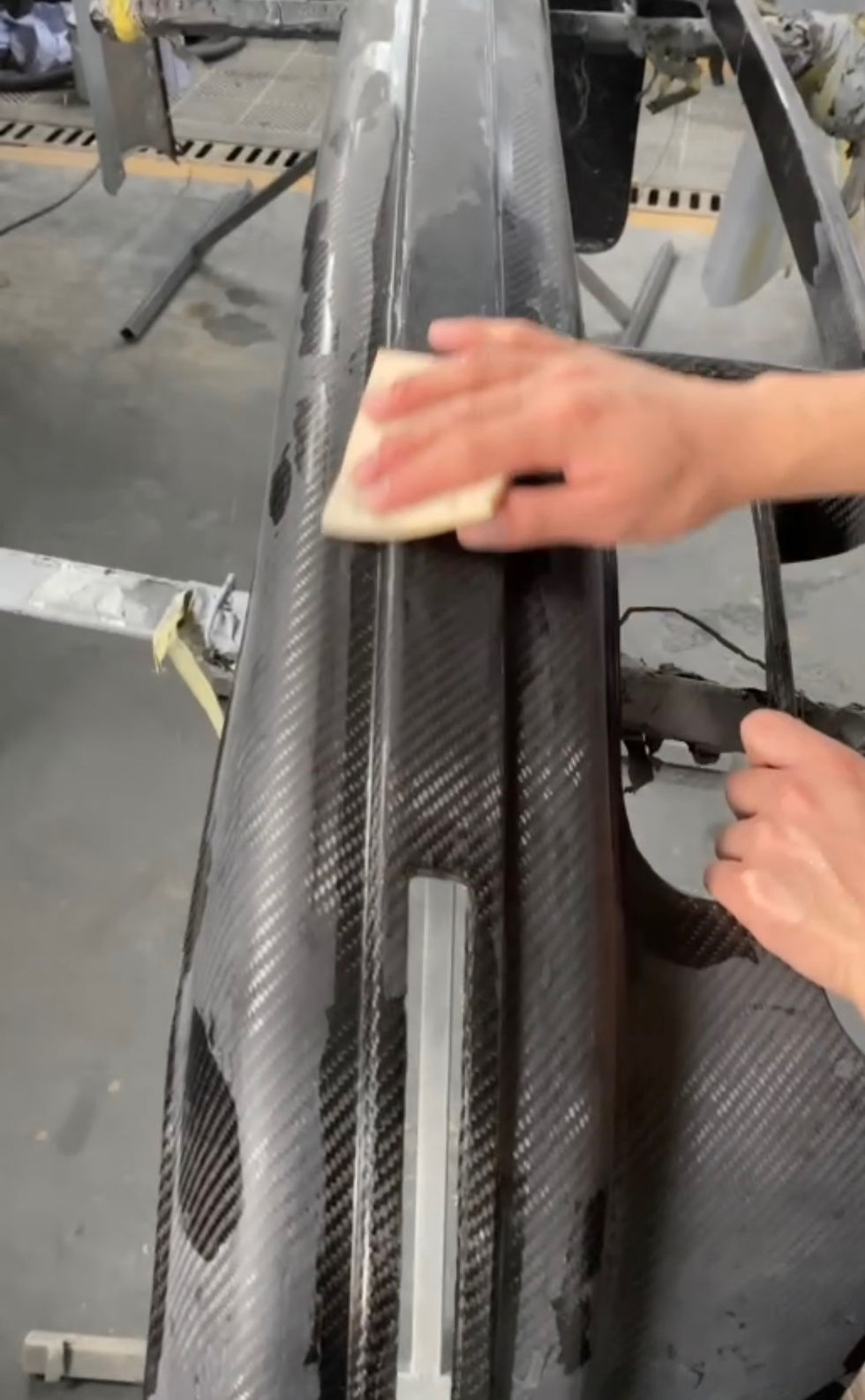
To finally get the finished look.


Comments